Forging Through a British Winter: Keeping Your Workshop Warm, Dry and Safe
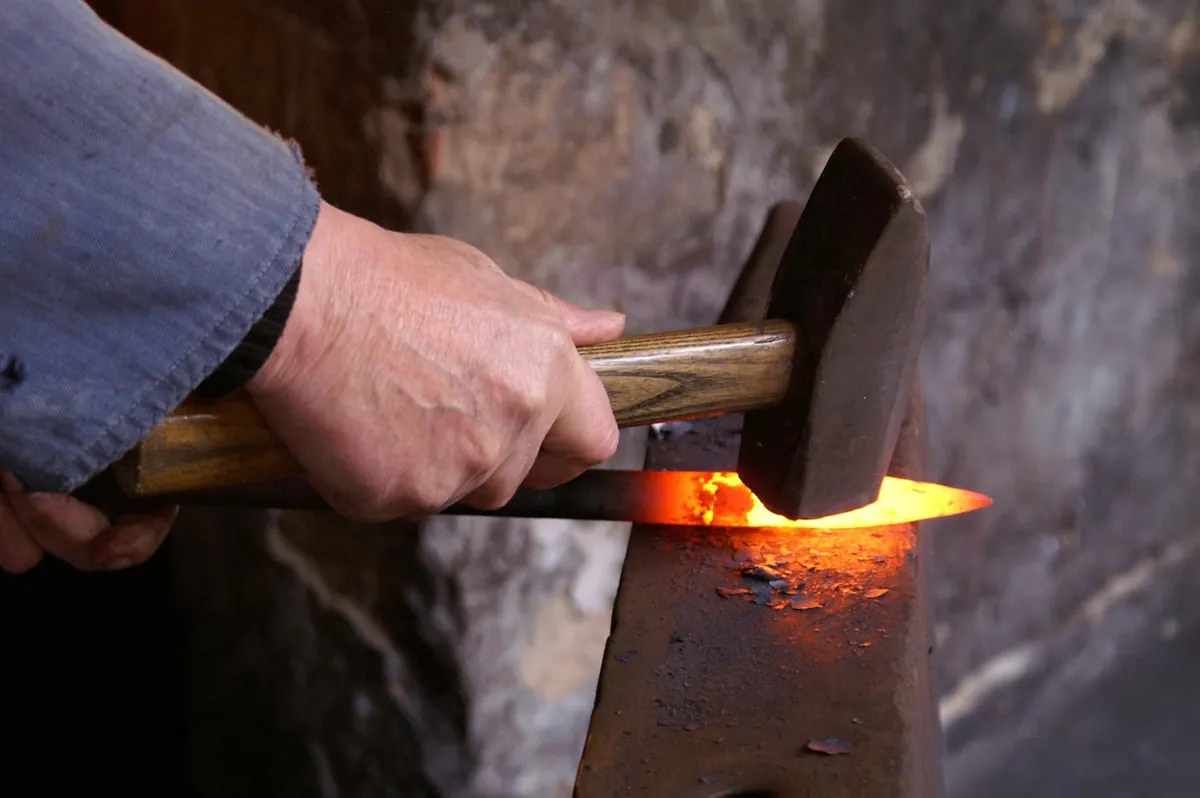
British winters are not dramatic. There is no deep freeze to plan around and no blizzard that shuts the lane for a week. What you get instead is four months of grey, damp air that finds its way into every corner of a workshop and settles on anything made of iron. You lift the latch on a Saturday morning and the anvil wears a thin orange bloom, the tongs have stiffened at the rivets, and your fingers are numb before the first heat is up. None of it is dramatic. Most of it is avoidable.
Cold steel sweats first
Condensation is the whole problem, and it has little to do with rain coming through the roof. It is about temperature difference. A workshop full of steel — anvil, vice, racks of stock — holds the cold long after the air outside has turned mild. When damp air drifts in and meets a surface sitting below the dew point, moisture drops out of it and lands on the metal. In a brick or stone outbuilding that never really warms up, that happens most mornings from November to March.
The floor makes it worse. Concrete stays cold, wicks damp up from the ground, and anything left lying on it will rust along the contact line within a day or two. Burn a litre of paraffin in a closed room and you add roughly a litre of water vapour to the air, which then condenses on the coldest thing in the room. Which is your anvil.
Give the damp somewhere to go
Ventilation is the first fix — before insulation, before heaters. Air that moves carries moisture out; air that sits still deposits it on your tools.
Two vents work better than one: a low-level inlet and a high-level outlet, ideally on opposite walls so there is a path between them. A forge flue needs make-up air to draw properly. Seal a workshop tight and the chimney will pull air down the other vent or through the door gaps, which is how you end up with smoke in your face and a cold draught round your ankles at the same time.
Think carefully about extractor fans. One sized for a spray booth, running in a sealed shed with a solid-fuel forge lit, will drag combustion gases back into the room. Fit the vents first, then decide whether you need mechanical extraction at all.
A small dehumidifier with a hose running to a drain is worth more than most heaters. Run it overnight, keep a cheap hygrometer on the wall, and you will soon learn what your building does. A cold, clear, frosty morning is the best time to throw the doors open; a mild, drizzly afternoon is the worst. Keep it shut then and let the dehumidifier earn its keep.
Rust: a fifteen-minute habit
Rust is easier to prevent than to shift, and prevention takes about a quarter of an hour at the end of a session.
- Get steel off the floor. Timber battens, an old pallet or a shelf a few inches up. Contact with cold concrete starts most rust.
- Wipe everything down with an oily rag. Keep the rag in a lidded tin rather than crumpled on the bench; oily rags can self-heat, so the tin matters.
- Wax the working surfaces. A thin coat of paste wax on the anvil face, vice jaws and machine tables sheds moisture without leaving everything greasy.
- Oil the joints. Tongs, shears, hinges and the screw on your leg vice will seize if water sits in them.
- Cover with something breathable. A plastic sheet over cold steel traps condensation underneath and makes things worse. A cotton sheet or an old curtain lets the metal breathe.
- Use vapour-phase inhibitor paper or bags for files, polished work and anything you want to stay bright. A tin of silica gel in a tool drawer helps too, if you dry it out on a radiator now and then.
- Deal with scale. Forge scale is porous and holds moisture against the surface beneath it. Brush it off before you put anything away.
Heating: warm the smith, not the air
Every winter someone tries to heat a forge with a propane cabinet heater and wonders why the rust gets worse. Unflued combustion heaters put water vapour and carbon monoxide into the room. In a workshop that is a bad trade. Keep them out.
A lit forge warms the space around it, but it is not a heating appliance. Do not bank it up and go home, do not run it with the flue damper shut, and do not rely on it to keep frost off your tools overnight. A properly flued wood stove is a different matter — but only with a sound flue, a carbon monoxide alarm on the wall and a flue that actually gets swept.
Dress for the job
Insulate the roof before you spend money on heat; most of it leaves through the top of the building. After that, dra
Photo: ptdh / Pixabay